


Your chest freezer is 48 inches wide. You've got 31 flavors in rotation, plus backup tubs, topping sauces, seasonal specials, and that weird pistachio-rose batch you made for a wedding order. Everything's stacked four deep, and when someone grabs French vanilla from the bottom during rush hour, three newer tubs get shoved aside and forgotten for weeks.
This isn't about being disorganized. It's the physical reality of running an ice cream shop where every square inch of freezer space matters and your staff is trying to scoop fast while customers wait. Shops lose $300-500 worth of good product monthly because older stock gets buried behind fresher deliveries.
Standard FIFO advice assumes you have walk-in freezers with proper shelving. Most independent ice cream shops work with 2-3 chest freezers, maybe a small upright, and zero room for organized racking systems. You need something that actually works when your freezer looks more like frozen Tetris than a warehouse.
Why rotation fails in tight freezer spaces
The main problem isn't poor training. When your morning delivery arrives and you're prepping for a noon rush, the fastest option is stacking new tubs on top. Fresh mint chocolate chip goes right on the pile while last week's batch sits at the bottom developing ice crystals that make texture grainy.
Chest freezers make this worse because you can't see what's underneath without digging. Staff naturally grab whatever's visible and accessible. During busy periods, nobody excavates through layers of frozen tubs to find older stock. Even well-meaning employees choose speed over rotation when there's a line of customers.
Temperature fluctuations from constant lid opening create another issue. Products near the top experience more swings, which speeds up quality loss. Meanwhile, bottom tubs stay consistently frozen but never get used. Your newest products deteriorate faster while your oldest products sit pristine but forgotten.
Small operations also deal with messy delivery schedules. Your supplier might deliver weekly, then suddenly show up twice in four days because of route changes. Now you're cramming unexpected inventory wherever it fits, destroying whatever organization you had.
Setting up zones that actually work
Forget organizing by flavor. In compact freezers, you need zones based on turnover speed and product type:
Keep your ice cream shop running smoothly.
Cremyly helps you manage every order, stock level, and staff shift with precision and ease.
- Real-time inventory tracking
- Order management dashboard
- Staff scheduling & shift coordination
No credit card required
| Zone | Details |
|---|---|
| Zone 1 - Fast movers (front third of freezer) | Your top 8-10 flavors that sell out within 5-7 days. Stack them only two deep maximum. Use milk crates or plastic bins for vertical separation so you can see both layers. |
| Zone 2 - Regular rotation (middle third) | Next tier of flavors, typically 10-15 varieties that move within 10-14 days. These can go three deep, but you need visual markers to know which layer you're pulling from. |
| Zone 3 - Slow movers and specialty (back third) | Limited batches, seasonal flavors, experimental combinations. These might sit 3-4 weeks. Keep them in clear, stackable containers so you can see dates without moving everything. |
| Sauce section (side wall) | All hot fudge, caramel, and fruit toppings against one wall in squeeze bottles or small containers. These have different shelf lives than ice cream and need separate rotation. |
For upright freezers, this works vertically. Top shelf for fast movers at eye level, middle shelves for regular rotation, bottom for specialty items. Never use door shelves for anything needing consistent temperature.
The labeling system that survives real operations
Fancy color-coded labels look great in training videos but fall apart during actual service. What works is dead-simple dating that anyone can read at a glance, even with frost buildup.
Use large black markers on white freezer tape. Write dates in huge numbers: 11/15 not "November 15th" or "11/15/24". Stick it on the lid and front side of each container. Why both? Lids get stacked and side labels stay visible.
Put the production and pull dates on both the lid and the front so one label is always visible when tubs are stacked.
For shops using the same containers repeatedly, invest in reusable magnetic labels. They stick to metal tubs, won't fall off in moisture, and you can update them without wasting tape. About $30 gets you a set lasting years.
Add the pull date - when the product should be used for optimal quality. For most ice cream, that's 21-28 days from production. Write it directly under the production date: 11/15 / USE BY 12/6. This removes decision-making during busy periods.
Skip colored dots, alphabet codes, or shift indicators. They require everyone to remember what symbols mean. When you hire seasonal staff or someone covers a shift, complex systems break immediately.
The 5-minute morning check routine
This happens before opening, every day. Not weekly, not "when we remember." Daily:
-
Minute 1-2
Quick visual sweep Open each freezer, look at the front row of each zone. Any dates older than your pull date? Those come out now and go into a "use today" bin near the scooping station.
-
Minute 3-4
Spot rotate Pick three random products from the middle layer. Check their dates. If they're within 3 days of expiration, move them to the front. This random sampling catches buried products before they expire.
-
Minute 5
Update the board Keep a small whiteboard on the freezer listing what needs to move today. Write three flavors that must be pushed. Scoopers check this board and suggest these flavors to undecided customers.
Make this check happen before any other prep work. Once you start making waffle cones or prepping toppings, it won't happen. Build it into your opening checklist right after turning on lights and before touching food.
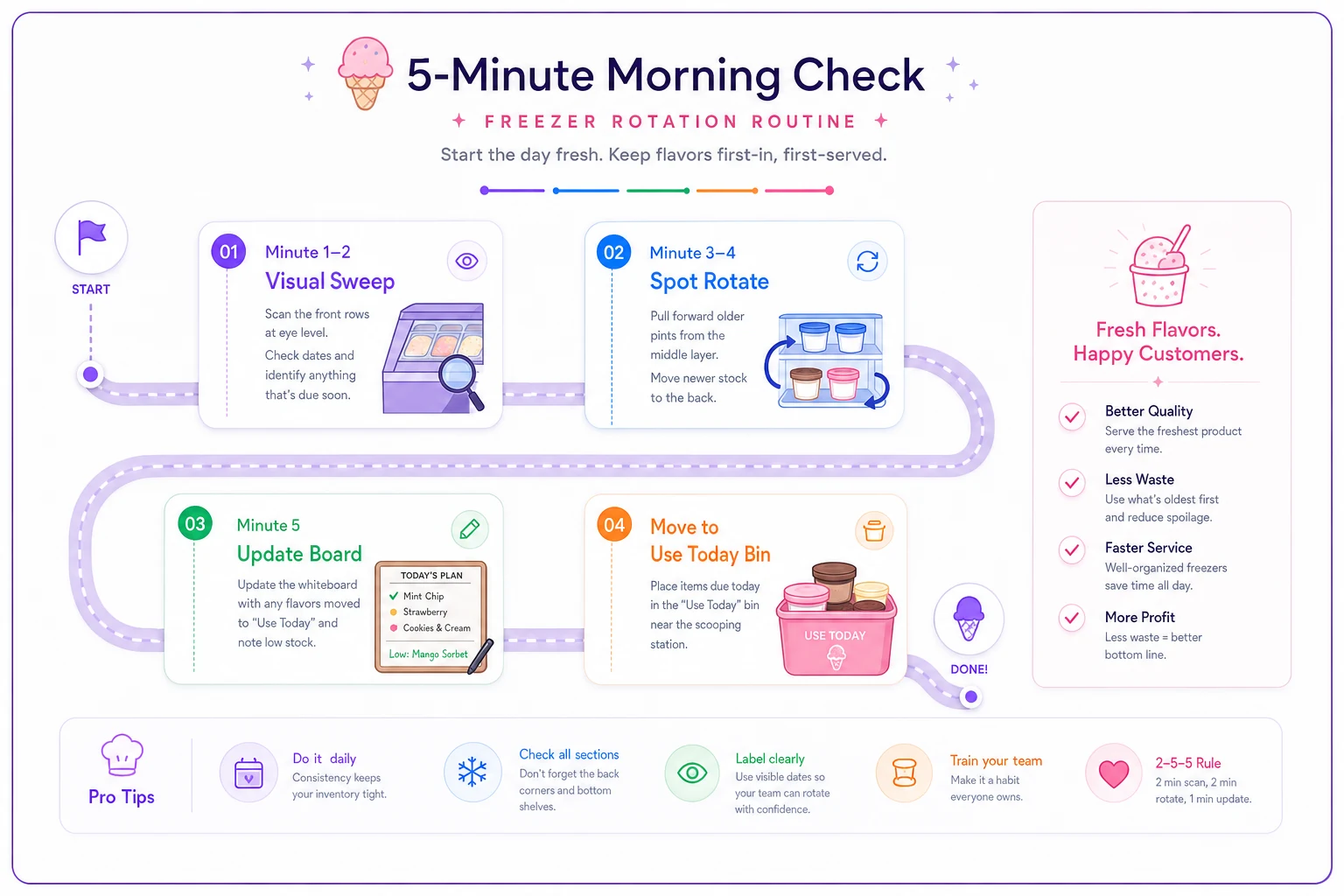
A quick visual flow like this helps staff remember the sequence and where to record items that need pushing.
Common violations and their real costs
The strawberry sauce incident happens everywhere. You make a fresh batch, pour it into squeeze bottles, and stack them behind older ones because "we'll use the old ones first." Three weeks later, you're tossing moldy sauce because nobody could see or reach those back bottles.
Partial tubs create huge problems. Someone opens a fresh tub during rush because they can't find the partial one. Now you have two open containers of the same flavor, both degrading in quality. Solution: keep ALL partials in a designated bin at the front of zone 1, regardless of flavor popularity.
Seasonal flavors are money pits when rotation fails. That pumpkin spice made in October sits forgotten until January when it's freezer-burned and worthless. Set phone reminders for any flavor expected to sit longer than two weeks. Check on it specifically.
Mystery tubs without labeling cost more than you think. Staff won't use them because they don't know how old they are. That unmarked vanilla could be three days or three weeks old. When in doubt, people leave it alone, and eventually someone tosses perfectly good product. Every container gets labeled, no exceptions, even when rushing.
Adjustments for different container types
Pint containers for retail need different handling than 3-gallon tubs for scooping. Pints should never stack more than 3 high because bottom ones compress and crack. Use wire shelf inserts to create levels within your chest freezer. This prevents tower collapses and lets you see all date labels.
Three-gallon round tubs can handle more stacking but create blind spots. The solution is offset stacking - don't align them perfectly vertical. Offset each layer by 2-3 inches so you can see edges of lower tubs. This wastes a bit of space but prevents the "forgotten bottom tub" problem.
Squeeze bottles for sauces should stand upright, never lay flat. Horizontal storage causes separation and makes dates impossible to read. Use a plastic dish tub to coral them upright. When you pull one for service, replace it from the back, pushing older bottles forward automatically.
Novelty items like ice cream sandwiches or bars need their own bin with dividers. These get crushed easily and have shorter shelf lives than tubs. Date each box, not individual items, and keep them separate from heavy tubs.
Making it work during peak season
Summer changes everything. Your turnover triples, deliveries come daily, and you might add 10 seasonal flavors. The zone system has to flex without breaking.
Convert Zone 3 (slow movers) into overflow for fast sellers. Those experimental flavors can move to a smaller backup freezer or even temporary cold storage if you have it. Priority goes to what's selling now. Document what goes into overflow storage with dates and locations. Otherwise, you'll forget about that lavender honey stored in the prep kitchen freezer.
During peak times, run the 5-minute check twice - morning and afternoon. The afternoon check at 3pm catches morning delivery items that got stacked wrong and identifies what needs pushing during the evening rush. This second check takes 5 minutes but prevents most rotation failures during busy seasons.
Assign one person to own freezer organization each week. Rotate this responsibility so everyone understands the system. This person does daily checks and has authority to reject badly stacked deliveries. When everyone owns it, nobody owns it. When one person owns it for a week, it actually happens.
The tech assist without overcomplicating
You don't need complex inventory software, but a basic spreadsheet or notes app helps track patterns. Record what expires unused each week. After a month, you'll see clear patterns - maybe rum raisin always expires, or you consistently over-order chocolate.
Set up simple phone alerts for slow-moving inventory. When you put away that special-order dairy-free batch, immediately create a phone reminder for 10 days later to check on it. This backup system catches products that might slip through daily checks.
Some shops use a basic tablet mounted on the freezer showing a live list of what needs to move today. Staff updates it during the morning check, and scoopers reference it throughout the day. This visual reminder drives behavior better than verbal reminders that get forgotten.
For shops ready to step up their operations, AI-powered inventory platforms can track production dates, predict expiration risks, and generate daily rotation lists automatically. These systems link POS data with inventory levels to flag slow-moving products before they expire. The manual system works fine for most single-location shops if you actually follow it.
When to break your own rules
Sometimes FIFO doesn't make sense. If tomorrow's catering order needs 5 gallons of cookies and cream, you don't serve the oldest stock to walk-in customers today. Pull tomorrow's order now and set it aside, then rotate normally with what remains.
Quality trumps dates occasionally. If Tuesday's batch of chocolate turned out perfect while Thursday's batch is slightly icy but still within date, serve the better product. Customer experience beats strict rotation when there's a noticeable quality difference.
During flavor transitions, intentionally break FIFO to clear out discontinued items. If you're dropping butter brickle from the menu, push it hard regardless of other flavors' dates. Better to violate rotation rules than toss full tubs.
New flavor launches need aggressive placement too. Put that new honey lavender front and center even if older flavors should rotate first. You need customer feedback quickly to decide if it stays on the menu. These strategic violations should be intentional and communicated to staff, not random decisions made during service.
Getting your team to actually follow through
The system fails without buy-in. Most staff see rotation as extra work that doesn't benefit them directly. Change this by showing them the waste numbers. Calculate what expired products cost monthly and divide by hours worked. When people see that waste equals $2-3 per hour they could be earning, they pay attention.
Make the daily check part of opening shift duties with a signature requirement. Not a checkbox, an actual signature with time. This accountability step seems minor but dramatically improves compliance. People don't like signing their name to something they didn't actually do.
Reward proper rotation publicly. When someone catches a near-expired product and pushes it successfully, mention it at shift meeting. Small recognition drives behavior more than criticism about failures.
Create a "save tracker" where staff logs products rescued from expiration. Set a monthly goal and celebrate when you hit it. This positive framing makes rotation feel like winning rather than preventing loss.
Perfect FIFO in a small ice cream shop with limited freezer space is basically impossible. But the difference between 95% compliance and 60% compliance is massive - we're talking hundreds of dollars monthly in prevented waste. The system doesn't need to be perfect. It just needs to be consistent enough that most products get used before they expire.
The shops that nail this don't have bigger freezers or more staff. They commit to the daily routine and adjust when reality demands it. Five minutes each morning, simple labels, and zones based on turnover. That's really all it takes to stop throwing money away in expired ice cream.
Ready to scoop up efficiency and grow your shop?
Join hundreds of ice cream shops using Cremyly to boost productivity, reduce waste, and delight customers with faster service.